Today, most people use the internet every day. They search on Google, watch videos, scroll through social media, and shop online. Because of this, businesses now promote their products and services online instead of depending only on TV, newspapers, or posters. But they don’t know how digital marketing works for business.
Digital marketing means using the internet to promote a business. It helps companies reach more people, attract customers, and increase sales. Businesses use websites, social media, emails, and online ads to connect with their audience.
Digital marketing is important for both small and large businesses. A local shop can use Facebook to reach nearby customers, while a big company can run ads across many countries. It also helps businesses track results easily. They can see how many people visited their website, clicked on an ad, or bought a product.
In simple words, digital marketing helps businesses grow by reaching customers where they already spend their time — online.
1. What Is Digital Marketing?
Digital marketing is the process of promoting products or services using the internet. Businesses use digital channels to talk to customers, share information, and increase sales.
These digital channels include:
- Search engines like Google
- Social media platforms like Instagram and Facebook
- Business websites
- Emails
- Mobile apps
- Online advertisements
Digital marketing is different from traditional marketing. Traditional marketing uses offline methods such as newspapers, radio, TV, and billboards. Digital marketing uses online platforms instead.
One major benefit of digital marketing is better targeting. Businesses can show ads to specific people based on their age, location, interests, or online activity. This helps companies reach the right audience.
Another benefit is easy tracking. Businesses can quickly check how many people saw an ad, clicked a link, or visited a website. This helps them understand what works and what needs improvement.
Digital marketing also costs less than many traditional marketing methods. Small businesses can start with a small budget and still reach many people online.
Today, digital marketing has become an important part of business growth because customers spend more time online than ever before.
2. How Digital Marketing Works for Business
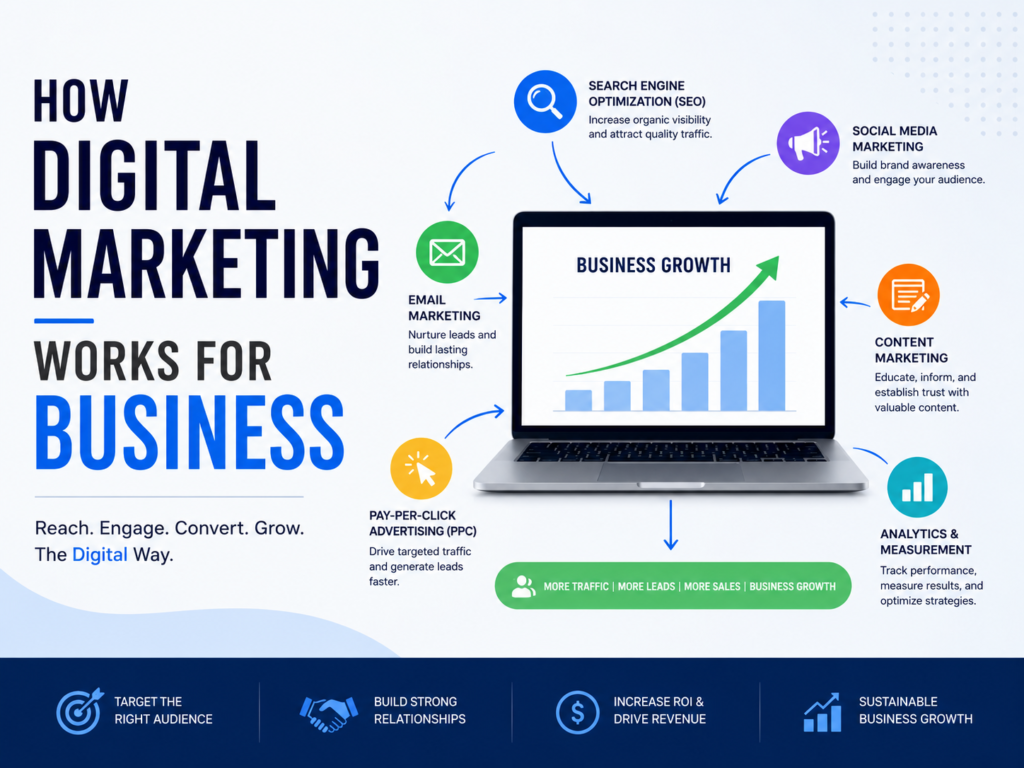
Digital marketing works through a simple process. Businesses use online platforms to attract people, turn them into customers, and build long-term relationships with them.
The first step is understanding the target audience. Businesses need to know who their customers are. They study customer interests, age groups, locations, and buying habits. This helps them create better marketing messages.
The second step is setting goals. A business may want more website visitors, more sales, more social media followers, or more email subscribers. Clear goals help businesses plan their marketing activities.
The next step is choosing the right digital marketing channels. Different businesses use different platforms. For example:
- A clothing brand may use Instagram and Facebook.
- A software company may focus on Google search and LinkedIn.
- An online store may use email marketing and paid ads.
After choosing the platforms, businesses create content. This content may include:
- Blog articles
- Social media posts
- Videos
- Emails
- Online advertisements
Good content helps businesses attract attention and build trust with customers.
Businesses then guide users to a website or landing page. Here, visitors can learn more, buy products, sign up for emails, or contact the company.
The final step is tracking results. Businesses use tools like Google Analytics to measure performance. They check website traffic, ad clicks, sales, and customer engagement. This helps them improve future campaigns and get better results.
For example, a local restaurant may run Facebook ads to promote a new menu item. Customers click the ad, visit the website, and place online orders. The restaurant can then track how many sales came from the ad campaign.
3. Major Types of Digital Marketing
Businesses use different types of digital marketing to reach customers online. Each type has a different purpose and helps businesses grow in different ways.
Search Engine Optimization (SEO)
SEO helps websites appear higher on search engines like Google. Businesses use keywords, helpful content, and website improvements to attract more visitors from search results.
For example, a bakery in Delhi may use keywords like “best birthday cakes in Delhi” to appear in Google searches.
Social Media Marketing
Social media marketing uses platforms like Instagram, Facebook, LinkedIn, and X to connect with customers. Businesses share photos, videos, updates, and promotions to increase engagement and brand awareness.
This type of marketing also helps businesses talk directly with customers through comments and messages.
Content Marketing
Content marketing focuses on creating useful and valuable content. Businesses write blogs, make videos, create guides, and share tips to educate customers.
Helpful content builds trust and encourages people to choose the business later.
Email Marketing
Email marketing helps businesses stay connected with customers. Companies send newsletters, product updates, offers, and special discounts through email.
This method works well for keeping existing customers engaged and encouraging repeat purchases.
Pay-Per-Click Advertising (PPC)
PPC advertising allows businesses to run paid ads on Google and social media platforms. Businesses pay only when someone clicks on the ad.
This method can quickly bring traffic and customers to a website.
Influencer and Affiliate Marketing
Businesses also work with influencers and affiliate partners to promote products. Influencers share products with their followers, while affiliates earn a commission for generating sales.
This helps businesses reach new audiences and build trust faster.
4. Benefits of Digital Marketing for Businesses
Digital marketing offers many benefits for businesses of all sizes. It helps companies reach more people and grow faster.
One big benefit is wider reach. A business can promote its products to people in different cities or even different countries through the internet.
Digital marketing is also cost-effective. Small businesses can run online ads with a limited budget and still reach many customers. This makes it easier for new businesses to compete with larger companies.
Another advantage is better targeting. Businesses can show ads to people based on their age, location, interests, and online behavior. This increases the chance of getting real customers.
Digital marketing also helps businesses measure results easily. They can track website visits, ad clicks, sales, and customer engagement in real time. This helps them understand what is working and what needs improvement.
It also improves customer relationships. Businesses can quickly reply to messages, comments, and emails. This creates trust and keeps customers connected to the brand.
Overall, digital marketing helps businesses increase brand awareness, attract customers, and improve sales.
5. Tools Businesses Use in Digital Marketing
Businesses use different tools to manage their digital marketing activities.
For example, Google Analytics helps businesses track website traffic and visitor behavior. Social media tools help schedule posts and manage multiple accounts.
Email marketing tools allow businesses to send newsletters and promotional emails to customers. SEO tools help improve website rankings on search engines.
Many companies also use CRM tools to manage customer information and communication.
These tools save time and help businesses make better marketing decisions.
6. Common Challenges in Digital Marketing
Digital marketing also comes with some challenges.
One common problem is high competition. Many businesses are trying to attract the same customers online.
Another challenge is keeping up with changes. Social media platforms and search engines often update their algorithms. Businesses must adjust their strategies regularly.
Creating fresh and interesting content can also take time and effort. Some businesses struggle to post regularly or create engaging content.
Managing advertising budgets is another challenge. If businesses do not plan properly, they may spend money on ads without getting good results.
Even with these challenges, businesses can succeed with proper planning and continuous learning.
7. Future of Digital Marketing
Digital marketing continues to grow every year. New technology is changing how businesses connect with customers.
Artificial intelligence (AI) and automation are becoming more common in marketing. Businesses now use AI tools to create content, answer customer questions, and improve advertising campaigns.
Video content is also becoming more popular, especially short videos on social media platforms.
Mobile marketing, voice search, and personalized advertising are expected to grow in the future as more people use smartphones and smart devices.
Businesses that stay updated with new trends will have a better chance of success online.
Conclusion
Digital marketing has become an important part of modern business. It helps businesses reach customers, build brand awareness, and increase sales through online platforms.
Businesses use different digital marketing methods such as SEO, social media marketing, content marketing, email marketing, and online advertising to grow their audience and improve customer relationships.
One of the biggest advantages of digital marketing is that businesses can track results and improve their strategies over time. Even small businesses can compete online with the right marketing approach.
As technology continues to grow, digital marketing will become even more important for businesses in the future. Companies that use digital marketing effectively can reach more customers and achieve long-term success online.
Check out our digital marketing service here.
